Improve REM Sleep
Keep a consistent bedtime and wake time
Avoid screens at least 30 to 60 minutes before bed
Reduce alcohol in the evening
Manage late-day stress and overstimulation
Add a relaxing pre-sleep routine like light stretching or reading
Keep your room dim and quiet
Improve Deep Sleep
Keep your bedroom cool (mid 60s Fahrenheit is ideal)
Exercise regularly, especially earlier in the day
Avoid heavy meals late at night
Limit caffeine in the afternoon
Reduce late-night sugar or snacking
Use a comfortable mattress and pillows
Try calming breath work before bed
Increase morning sunlight exposure to stabilize circadian rhythm
How REM Sleep Works
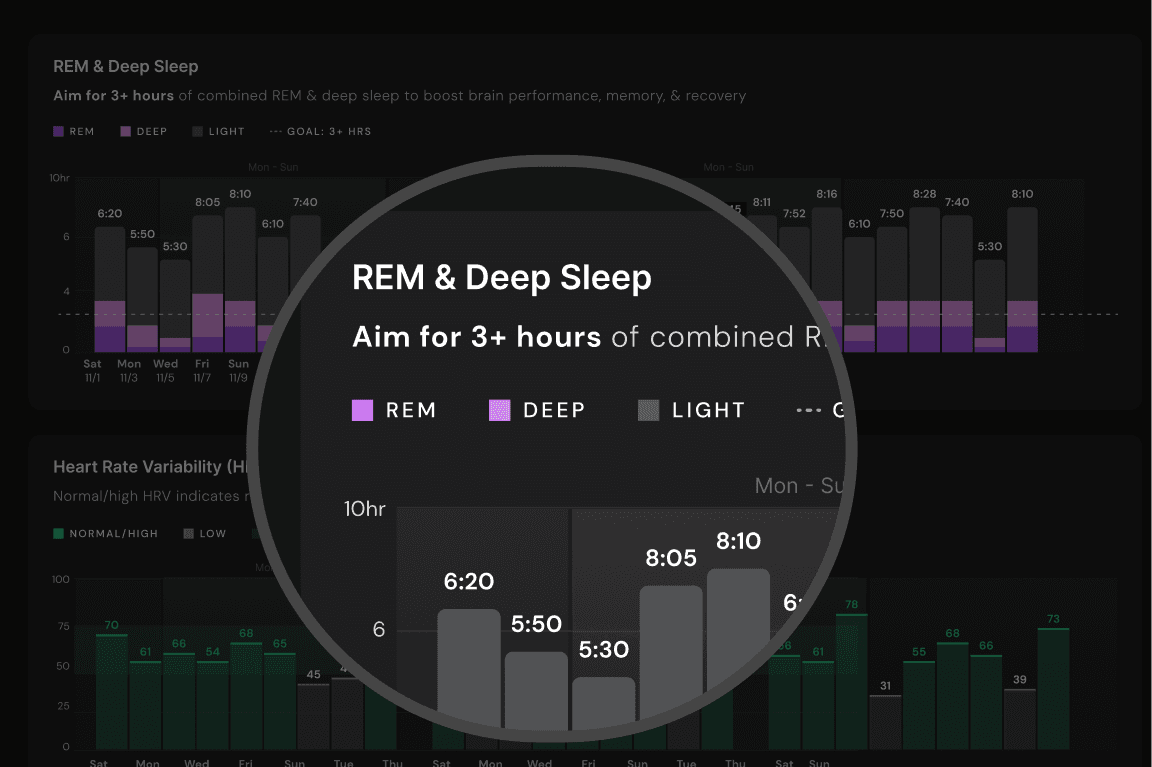
REM sleep features fast, irregular brain waves, elevated heart rate, quick breathing, and rapid eye movements. Even though the body stays relaxed, the brain is almost as active as when awake. This stage boosts memory consolidation, learning, creativity, mood regulation, and cognitive sharpness.
How Deep Sleep Works
Deep sleep has slow, steady brain waves, the lowest heart rate of the night, and minimal movement. It is the most physically restorative part of sleep. During this stage, the body repairs muscle tissue, reduces inflammation, strengthens the immune system, and supports metabolic and hormonal balance.
How They Compare to Light Sleep
Light sleep is a transition phase. Your brain activity slows, muscles relax, and your body settles in for deeper stages. Light sleep is essential for cycling between stages, but it is not where the strongest recovery benefits happen. Higher REM and deep sleep usually mean better mental sharpness, faster physical recovery, and improved long-term health.
Why Tracking These Stages Matters
Understanding your REM and deep sleep gives insight into stress levels, cognitive health, workout recovery, immune function, and whether lifestyle choices are helping or harming your sleep quality. Changes in these stages often predict dips in energy, mood, focus, and resilience.