
Glucose. That sweet, simple sugar. Harmless on paper, yet running the whole practice. Your body's primary fuel. Your brain burns through 120 grams daily. An unsteady supply up and down causes that mind to wander and that unshakable feeling of tiredness, even when you got full sleep.
It's just physiology Turkish, not a failure on your part.
THE BIG IDEA
What's going on inside?
Carbohydrates convert directly into glucose. Protein converts slowly and only when the body calls for it. Fat produces minimal immediate effect on blood glucose.
The speed of absorption matters most. Refined carbohydrates enter the bloodstream fast, producing rapid spikes. Fiber slows that absorption. Protein slows it further. The order in which you eat foods at a meal changes the entire shape of your glucose response,
A predictable supply of energy allows your brain to optimize for other higher order functions. When glucose drops too low, the brain struggles with limited fuel reserves. When it climbs too high, insulin floods in to bring it back down, and in some people, their brains read the fast drop as a fuel problem. Stress hormones kick in making them feel hunger, fatigue, irritability, or that foggy, scattered feeling that makes the second half of the day so difficult. The up and down cycle drains resources from the rest of your body leading to a challenging series of unfortunate events for your health.
The more things change, the more they stay the same.
Human biology evolved gradually over a very long time but the food environment transformed in a generation.
Today's meals run higher in refined carbohydrates, lower in fiber, and larger in portion than anything recent ancestors would recognize.
Structured movement has also declined across most professions. We also live longer than ever before, so many of these later in life insights become way more apparent. Together, these shifts produce wider glucose swings in people who by every conventional measure appear healthy.
1 in 3
American adults has prediabetes.
Up to 80% are unaware.
Source: CDC, 2023
Testing your glucose through a standard fasting labs (the reason the team asks you not to eat before bloodwork!) can look entirely normal while post-meal glucose tells a very different story. It’s one of the most underserved gaps in routine medical care.
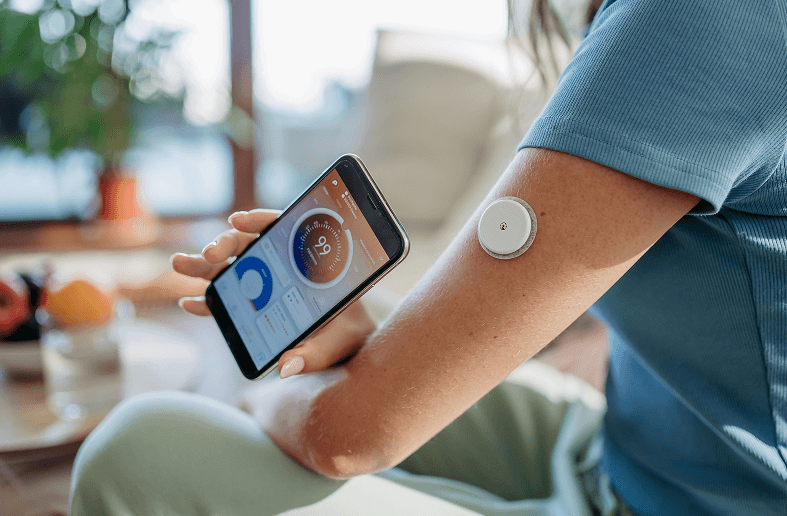
That’s why at Sperity Health, we’ve been big proponents of small, wearable continuous glucose monitors (CGMs) and pairing you with nutritionists to actively discuss and review the personalized data from the devices. It tracks your ups and downs throughout the day and night. Knowing how your body reacts helps things stay the same so you can change and chase what you’ve been after. Most members find that one 30 day period fundamentally shifts how they eat and move.
The most common response: "I had no idea that was affecting my blood sugar."
Awareness drives behavior change more reliably than willpower.
Haven’t gotten a CGM or want an extension of the one month program, please reach out to care@sperityhealth.com
YOUR SMALL WIN THIS MONTH
At one meal each day, eat protein before any starches or sugars. The choice matters less than the sequence. Randomized trials show this habit reduces post-meal glucose spikes by 20 to 30 percent, lowers your insulin response, and improves how the body handles glucose at the following meal.
No calorie counting or new diet.. Just the order.

Quick Sugar Hits
Walking – Who Knew?
Contracting muscles pull glucose directly out of the bloodstream, independently of insulin. A 10 to 15 minute walk after a meal produces a significant reduction in post-meal spikes.
A 2022 meta-analysis by Agarwal et al. in Sports Medicine found post-meal walking matched or outperformed medications commonly prescribed in early metabolic disease. When a walk isn't possible, 20 bodyweight squats, 20 calf raises, or 10 countertop push-ups activate the same mechanism.
Agarwal et al., Sports Medicine — full meta-analysis
It’s Just a Snack
Pairing protein with fiber when you do snack produces a smoother glucose curve and more sustained energy than either nutrient alone.
Almonds with an apple, Greek yogurt with berries, boiled eggs with raw vegetables, hummus with bell peppers. Goal: smoothing the curve because each swing up or down creates stress and excess.
About the Late-Night Sweet Treat – Just an FYI
Nighttime glucose spikes reduce slow-wave sleep and increase awakenings. Broussard et al. documented this clearly in Sleep, 2015. You can log eight hours and still wake feeling unrefreshed when glucose disrupts the architecture of sleep beneath the surface. What happens after dinner deserves a close look.
Source: St-Onge, M.-P., et al. Fiber and Saturated Fat Are Associated with Sleep Arousals and Slow Wave Sleep. Journal of Clinical Sleep Medicine, 2016. https://jcsm.aasm.org/doi/10.5664/jcsm.5384
A Member Story: Phillip Ramsey, 39
Health: Built on Habits BUT Confirmed by Data
By: Phillip Ramsey

For most of my adult life, I would have told you I was doing the right things.
I worked out three to four days a week. I ate what I considered a healthy diet. I played competitive soccer at the collegiate level, pushing my body hard and assuming that endurance and performance were proof of health. I felt strong. Fit.
Which is why it surprised me to learn that I actually knew nothing. The Sperity Health program opened my eyes
TWENTY-FIVE to FIFTY PERCENT!!

Not catastrophic and not apparently stent-worthy, but still not nothing.
That number forced me to confront that being “in shape” is not the same as being metabolically healthy. Athletic performance can mask underlying risk. You can run hard, compete hard, and still have plaque quietly forming in places you can’t see.
That angiogram was a wake-up call. It made me reevaluate the gap between “pretty good” and “optimal.” I realized that my diet, while decent, had room for significant improvement. Portion sizes. Hidden sugars. Processed foods that were convenient. It made me more intentional about quality lean proteins, more fiber, more plants, and fewer refined carbohydrates. I’m not perfect, but data revealing your mortality has a was of showing you purpose.
It also forced an honest look at alcohol. Social drinks here and there had slowly become a regular rhythm. Nothing excessive by cultural standards, but enough to normalize what didn’t need to be normalized. Reducing alcohol wasn’t about restriction it was about reducing inflammation, improving recovery, and giving my cardiovascular system one less thing to battle.
And then there was training.
I had always worked out consistently, but I began to question intensity. Was I challenging my cardiovascular system in the right ways? Was I pushing into zones that truly improve VO₂ max and heart efficiency? I started incorporating higher intensity interval work, short bursts that force adaptation. The kind of training that demands discomfort but builds resilience.
The irony is this, I didn’t feel unhealthy before. But I now understand that health is not something you assume, it’s something you measure, refine, and actively pursue. It’s a shifted my mindset from maintenance to optimization.
It reminded me that genetics matter. That stress matters. That invisible factors matter. And that leadership whether in business, family, or community starts with owning your personal responsibility.
I share my story to encourage curiosity. If someone who works out regularly and competes in high level athletics can uncover a silent risk, it reinforces the value of proactive testing, and continual self assessment.
The goal isn’t to avoid fear but to have longevity. To have energy for our families. To compete at high levels for decades. To show up mentally sharp and physically capable. To lead by example not just in work ethic, but in stewardship of our own bodies.
That angiogram didn’t define me. It refined me.
And sometimes, the greatest breakthroughs don’t come from doing more.
They come from seeing clearly.
Additional Reading
Stay Informed. Stay Healthier
Receive practical health insights and the latest Sperity news.