
Researchers followed 102,980 adults and observed a consistent pattern:
Every +1 MET improvement reduced all-cause mortality by ~10–15%.
(Kodama et al., JAMA; Ross et al., Circulation)
The most important insight:
A +1 MET improvement comes from modest but consistent increases in physical demand — the kind of changes you can integrate into daily life without overhauling anything.
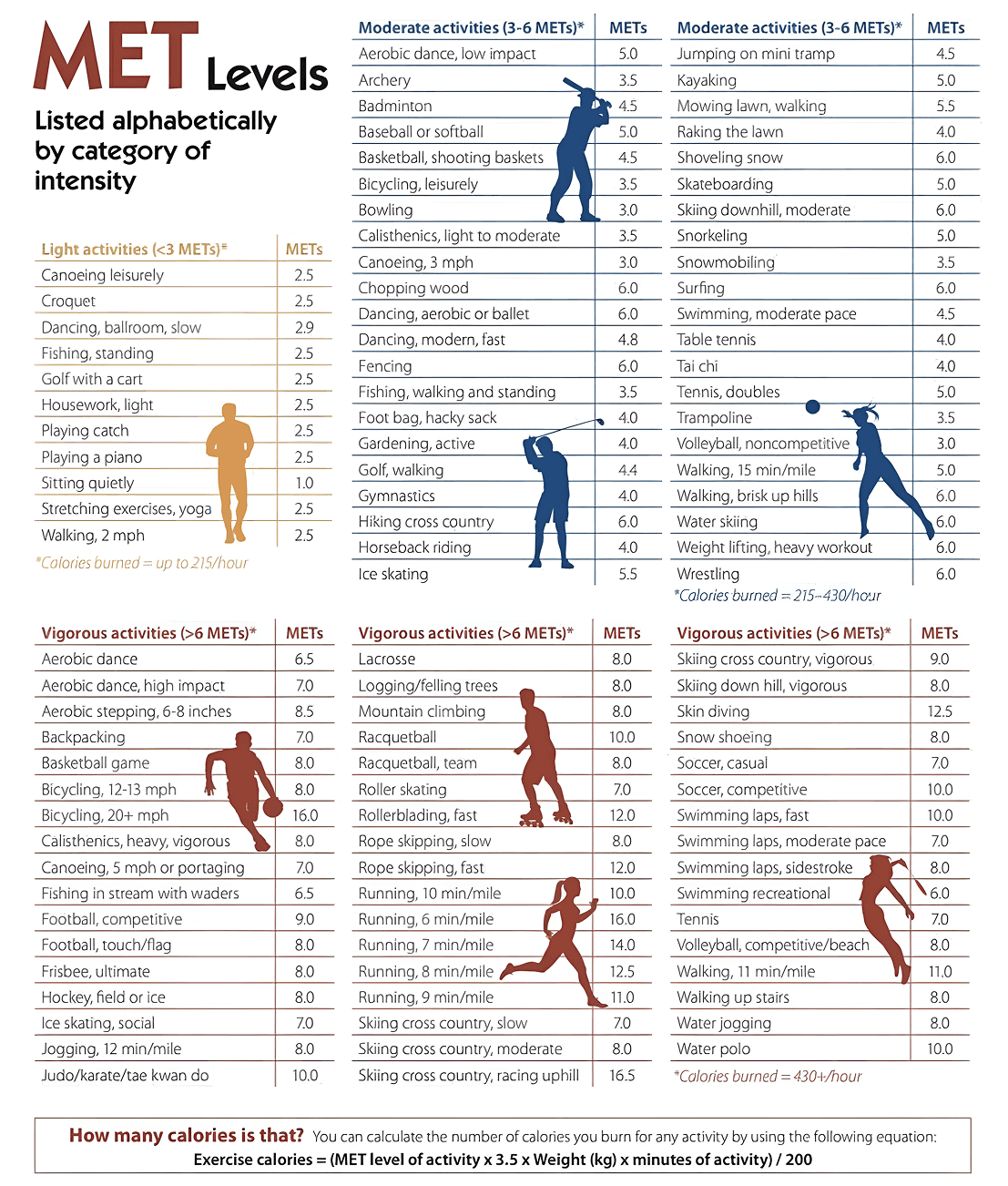
Boosting your MET capacity involves making your cardiovascular system more efficient, resilient, and capable. Simple, focused actions can help raise this number—essentially giving your body more & "engine power."
Real Life Measurement and Tracking
METs require lab testing, so we translate improvements using a metric your wearable already gives you: VO₂ max. The two are mathematically linked:
1 MET = 3.5 mL/kg/min of VO₂.
This gives you a measurable target:
A +3–4 point rise in VO₂ max ≈ +1 MET
A +6–8 point rise ≈ +2 METs
Practical benchmarking:
Your VO₂-max trend — upward movement over weeks and months.
Your real-world performance — lower heart rate at a given pace, better recovery, easier stairs.
Your lived experience — daily movement feels more manageable and less taxing.
When these improve, your MET capacity has improved.
Why This Matters
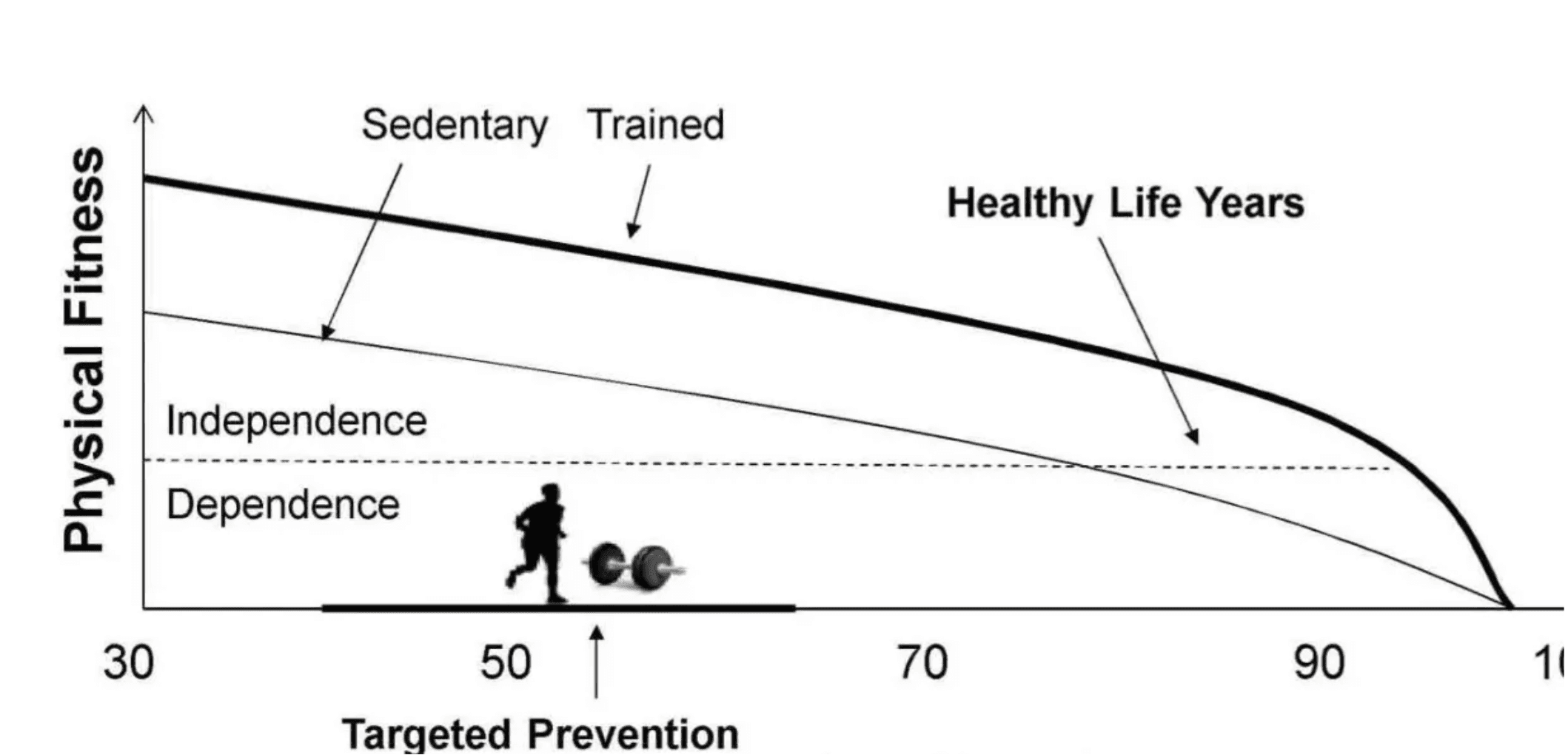
MET capacity represents the buffer your body carries into every day — the reserve that determines how efficiently you handle physical, metabolic, and emotional demands.
Improving that buffer leads to measurable, immediate and long-lasting benefits:
Your 1% Win This Month
Take an 8 to 10 minute brisk walk immediately after your largest meal. Walk with intention. You should feel your body working. Physiological impact:
Muscles pull glucose from the bloodstream
Insulin demand decreases
Energy levels stay more stable
Inflammation trends downward
VO₂ max improves when repeated consistently
Supported by evidence:
Post-meal walking reduces glucose by 24–30%
(Agarwal et al., Sports Medicine, 2022)Even 2 minutes of movement creates measurable improvement
This habit compounds quickly and integrates seamlessly into daily life.
Biomarker Spotlight: Glucose
Glucose gives you a real-time view of how your body handles energy. The biomarker reacts to almost everything you do: what you eat, how you move, how well you sleep, and how stressed you feel. Your body pushes glucose up when it needs quick energy and pulls it down when your muscles and cells take that energy up efficiently. Because it responds so quickly, glucose becomes a clean signal for how your metabolism handles day-to-day life.
A fasting glucose number offers a quick snapshot, but your daily habits shape the entire curve. The same behaviors that raise MET capacity also steady glucose throughout the day:
Walk after meals. Your muscles pull glucose out of your bloodstream and lower the spike.
Eat protein first thing in the morning. You anchor the day and flatten the next several hours.
Sleep consistently. Your body improves insulin sensitivity overnight.
Reduce visceral fat. You lower metabolic load and improve glucose handling.
Strength train. You increase the muscle demand that clears glucose efficiently.
When you adjust these factors, your glucose levels change quickly. Sending your body steady signals helps maintain stable metabolism.
Nutrition Insight: Set the Tone With Breakfast
Add 10g of protein to your first meal.
This small change:
Reduces hunger hormones by 15–20%
Stabilizes glucose for 4–6 hours
Improves appetite regulation later in the day
Current Habit | Swap In | Why It Works |
|---|---|---|
Toast + fruit | Add ½ cup Greek yogurt | Stabilizes glucose and adds 10g immediately |
Coffee only | Add collagen or whey isolate | Easiest path to 10–20g with zero prep |
Breakfast bar | Swap to a bar with ≥10g protein | Same convenience, better metabolic profile |
Oatmeal | Add protein milk instead of water | Turns a carb-heavy breakfast into balanced fuel |
Skipping breakfast | Drink a 20-second protein shake | Keeps morning cortisol and hunger stable |
Strength Insight: A Little Strength for High Impact
Strength training builds muscle and capacity that drives mobility, stability, and long-term health.
Complete this once this week:
8-Minute Strength Flow
30 sec squats
30 sec push-ups (wall or knees work well)
30 sec step-ups
30 sec rest
Repeat 4 times.
This improves:
Glucose clearance
Leg strength
Mitochondrial capacity
VO₂-max trajectory
Studies: Steele et al., Sports Medicine; Hunter et al., J Strength Cond Res.
Sleep Insight: A Path to Better Metabolic Control
Sleep recalibrates your metabolism, mood, and recovery so you feel sharper tomorrow, steadier next week, and measurably healthier next year.
Dim your lights 60 minutes before bed.
Bright overhead light suppresses melatonin by up to 50% (Gooley et al., J Clin Endocrinol Metab), which leads to:
Elevated nighttime heart rate
Lower HRV (Heart Rate Variability – Recovery)
Reduced deep sleep
Higher morning glucose
A darker wind-down environment stabilizes circadian rhythms and improves recovery.
A Member Story
David Perez, 42

David joined Sperity in August 2025. He lives in Atlanta with his wife and their four kids, and like a lot of people in demanding careers, he spent years moving fast and dealing with whatever the day put in front of him. Eight years in private equity real estate will do that—late nights, market swings, constant pressure, and very little space to notice what your own body is trying to say.
His labs had been sliding for a while—cholesterol around 200, weight creeping up, vitamin D stuck at 20. Nothing dramatic, nothing that forced a hard stop. Just the quiet drift that comes when your attention goes everywhere except inward.
What actually got his attention wasn’t his own data—it was his dad.
His father is 79, Cuban, and has lived with diabetes for years. A couple of years ago, he started wearing a (CGM) and paying attention to what happened when he ate certain foods, how a short walk changed the curve, and which meals his body handled well. He didn’t overhaul anything; he just learned. The learning worked—he came off his diabetes and cholesterol meds slowly, steadily, without making his life smaller.

Last Noche Buena, David watched his dad polish a full plate of black beans and rice, glance down at his phone and pull up the CGM data on his phone, and grin. A moment just for him—a man who understood what his body was doing and how he’d tamed it. It stuck with David.
David’s own journey looks different, but it started from the same place: wanting to understand what his body is doing and how to support it without turning his life upside down. With support from his Sperity Health MD, he started by focusing on a few key changes: getting an extra thirty minutes of sleep, eating protein in the morning, and addressing his ongoing vitamin D deficiency. Nothing extreme, but enough to steady his energy and help him feel like he’s back in the flow with himself.
A Note From Your Sperity MD
Capacity is one of the most underestimated parts of health. You don’t feel it building day to day, but it’s the thing that carries you when life gets heavy: illness, stress, aging. Those unexpected moments none of us plan for. I see it every week in clinic. The people who invest small, steady effort end up with a margin that protects them in ways no medication can fully replicate.
You don’t have to do everything at once. You just need to stay in conversation with your body. Notice what gives you energy, what drains you, what helps you recover. The data we track is a way to make that conversation clearer.
We’re here to support you every step of the way. Feel free to share your questions, successes, and interests. If you know someone who shares your curiosity, invite them to join this journey. Building health span together with those we value helps it flourish.
Additional Reading
Post-meal walking: https://pubmed.ncbi.nlm.nih.gov/35198765/
METs & mortality risk: https://jamanetwork.com/journals/jama/fullarticle/182883
Evening light exposure: https://academic.oup.com/jcem/article/96/3/E463/2833676
Protein timing: https://academic.oup.com/ajcn/article/101/3/540/4564490