
Longevity healthcare is an approach to medicine that focuses on helping people maintain their health, physical function, and quality of life as they age. Rather than focusing exclusively on treating illness after symptoms develop, longevity healthcare emphasizes understanding individual health risks, monitoring changes over time, and taking proactive steps to support healthier aging.
By combining preventive healthcare, advanced diagnostics, lifestyle interventions, and ongoing health monitoring, longevity healthcare aims to extend healthspan, the number of years a person lives in good health.
Longevity healthcare focuses on maintaining health and reducing the risk of age-related diseases through personalized preventive care. It brings together established medical practices, such as cardiovascular risk assessment and preventive screenings, with emerging tools that may provide additional information about biological aging and long-term health.
Common Areas of Focus:

Monitoring blood sugar regulation, cholesterol, and other metabolic indicators.

Understanding risk factors associated with heart disease and stroke.

Evaluating cardiovascular endurance, muscle strength, and body composition.

Assessing factors that may influence brain health and cognitive function.

Understanding how sleep quality and daily recovery patterns relate to overall well-being.

Developing sustainable habits that support long-term health.
Longevity Healthcare vs. Traditional Healthcare
Traditional healthcare and longevity healthcare share many important goals, including disease prevention, early detection, and effective treatment.
Category
Prevention, diagnosis, and treatment.
Prevention, healthy aging, and long-term function.
Based on clinical needs and screening guidelines.
May include additional long-term assessments.
Addressed through routine care and recommendations.
May include VO₂ Max, grip strength, and body composition.
Not routinely integrated.
Incorporated into ongoing health monitoring and clinical assessments
Nutrition, exercise, and sleep recommendations.
Personalized guidance with continued tracking.
Ongoing care based on medical needs.
Emphasis on comparing health trends over time.
Common Tests Used in Longevity Healthcare
About


Biological age assessments estimate aspects of how your body is aging compared with your chronological age.
These measurements can provide additional context about health trends, although biological age estimates vary by methodology and should not be interpreted as definitive measures of overall health.

Body composition analysis, grip strength testing, and cardiovascular fitness assessments provide insights into muscle mass, body fat, strength, and physical performance. Tracking these measurements over time can help evaluate changes in fitness and overall physical health.
Compatible wearable devices, including WHOOP, Oura, and Garmin, can provide ongoing information about sleep, heart rate variability (HRV), activity, and recovery.
Sperity Health integrates supported wearable data into its member platform, allowing members and their care teams to review trends between visits.
Your Sperity Health physician reviews your test results, medical history, and wearable data to develop personalized recommendations for your long-term health.
Our program also includes consultations with nutrition, sleep, and exercise specialists who provide expert guidance to help improve your diet, sleep quality, physical fitness, and overall well-being.
Devices such as WHOOP, Oura, and Garmin can provide information about sleep, activity, heart rate, and recovery. When interpreted appropriately, these measurements may help individuals recognize patterns and make informed lifestyle decisions.

01 / Sleep Monitoring
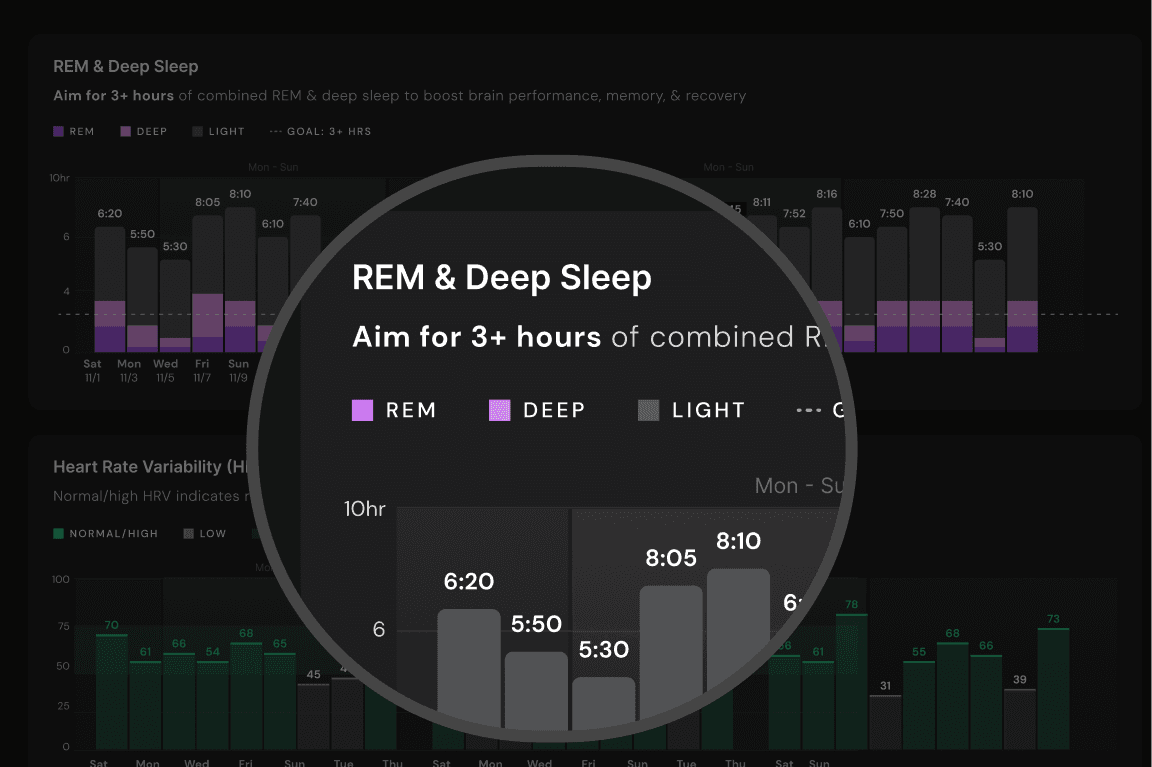
Sleep plays an important role in physical recovery, cognitive function, metabolic health, and overall wellbeing. Wearable devices can estimate sleep duration, sleep stages, and other sleep-related patterns.
02 / Heart Rate Variability (HRV)
Heart Rate Variability measures variations in the time intervals between heartbeats. HRV is influenced by the autonomic nervous system and can change in response to sleep, physical activity, illness, stress, and recovery.
Tracking HRV relative to an individual’s baseline may provide useful information about physiological trends.

03 / Physical Activity
Daily movement and regular exercise are important components of healthy aging. Wearable devices can help monitor steps, activity duration, and exercise patterns. These measurements may support consistent physical activity and help individuals evaluate progress toward personal fitness goals.

04 / Wearable Data & Clinical Insights
At Sperity Health, our physicians, nutritionists, sleep specialists, and exercise physiologists review wearable data alongside clinical test results. By connecting daily sleep, recovery, and activity patterns with clinical health trends, our care team gains a more complete picture of your health and can provide more personalized recommendations.

How Physicians Use Health Data to Support Longevity
Collecting health data is only one part of preventive healthcare. The greater value comes from understanding what the measurements mean and identifying appropriate actions. Physicians evaluate health information in the context of medical history, symptoms, family history, medications, lifestyle, and established clinical guidelines.
Identifying Potential Health Risks
Clinical assessments may identify risk factors associated with cardiovascular disease, metabolic disorders, and other health conditions. Recognizing relevant risk factors can help physicians recommend appropriate preventive measures.
Establishing a Health Baseline
A baseline assessment provides a reference point for future measurements. For example, physicians may evaluate cholesterol levels, blood glucose, cardiovascular fitness, or body composition at the beginning of a health program.
Monitoring Changes Over Time
Repeated assessments can help identify changes that may not be apparent from a single measurement. Comparing results over time can provide information about whether certain health indicators are improving, remaining stable, or warranting additional evaluation.
Developing Personalized Recommendations
Based on individual findings, physicians may recommend adjustments to:
• Nutrition and dietary habits.
Cardiovascular and strength training.
Sleep routines.
Weight management.
Stress management.
Preventive screenings and follow-up care.
These recommendations should be tailored to individual needs rather than based solely on wearable scores or isolated biomarker results.
How Sperity Health Approaches Longevity Healthcare
Sperity Health combines physician-led preventive healthcare, advanced medical assessments, and supported wearable technology to help members better understand their health over time. Our approach focuses on connecting clinical measurements with ongoing health insights and personalized recommendations.
Comprehensive Health Assessments
Sperity Health programs may include advanced blood testing, VO₂ Max testing, body composition analysis, grip strength testing, cognitive assessments, and other physician-selected diagnostics.
Physician-Led Care
Our physicians review clinical results, medical history, and wearable data to develop personalized health recommendations and identify when additional testing or follow-up care may be needed.
Nutrition, Sleep, and Exercise Guidance
Our nutrition, sleep, and exercise specialists help members develop personalized strategies to improve daily dietary habits, sleep quality, physical fitness, and overall health and well-being.
Continuous Wearable Insights
Connect WHOOP, Oura, Garmin, and other compatible devices to track sleep, activity, and recovery. The Sperity Health Score helps members monitor their daily sleep and recovery goals.
Longitudinal Health Tracking
By comparing clinical findings over time, members and their physicians can identify changes in core health measurements, track overall progress, and better understand long-term health trends.
A Connected Health Experience
The MySperityHealth platform brings together biomarker results, biological age, and wearable insights, helping members track their progress and prepare for conversations with their care team.
FAQs
How does longevity healthcare work?
Designing homes that blend comfort with sophistication, where every detail is considered to create a harmonious living environment.
Is longevity healthcare evidence-based?
Designing homes that blend comfort with sophistication, where every detail is considered to create a harmonious living environment.
What tests are used in longevity healthcare?
Designing homes that blend comfort with sophistication, where every detail is considered to create a harmonious living environment.
How does longevity healthcare differ from preventive medicine?
Designing homes that blend comfort with sophistication, where every detail is considered to create a harmonious living environment.
At what age should you start focusing on longevity?
Designing homes that blend comfort with sophistication, where every detail is considered to create a harmonious living environment.
Does longevity healthcare replace my primary care physician?
Designing homes that blend comfort with sophistication, where every detail is considered to create a harmonious living environment.
Can executive health programs help prevent chronic diseases?
Designing homes that blend comfort with sophistication, where every detail is considered to create a harmonious living environment.